Security gates look simple from ten feet away, but anyone who has hung one in a stubborn masonry opening or tried to line up a scissor stack under a sagging lintel knows better. The difference between a gate that glides and a gate that binds starts long before the truck shows up. It starts with a site survey worth its salt and custom drawings that remove the question marks. If you run a shop, manage a plaza, or spec commercial security gates for a living, the quiet success of your project depends on those two pieces more than any catalog spec.
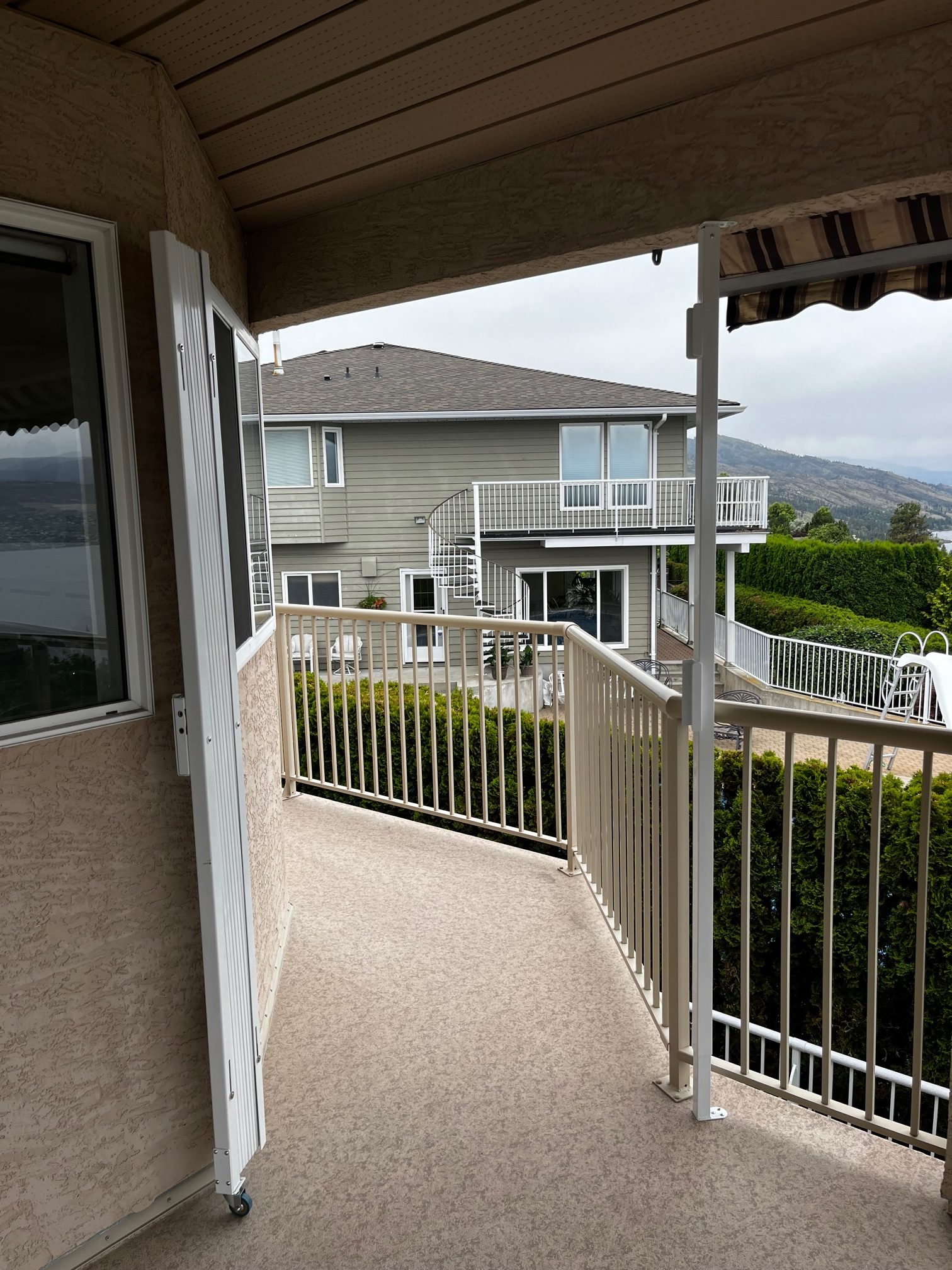
I’ve walked into enough doorways with a tape measure and left with a headache to say this plainly: expanding security gates are not one-size-fits-all. An accordion security gate that fits a square, plumb, level opening in theory will still complain when it meets a real building. Floors slope. Jambs bow. There’s a conduit exactly where the best anchor should go. Good site surveys find those details. Good drawings fix them on paper before you feel them in your forearms.
The real job of a site survey
A proper survey does more than check width and height. Think of it as a reconnaissance mission. You want to know how that security gate will live day to day, not just whether it squeezes into the opening. Commercial security gates take abuse. They get slammed at closing, yanked open in a hurry, hit by pallet jacks and snow shovels. If you plan for the forces, the gate will last. If you gloss over the job, you will be back with a box of shims and a tight smile.
Here is the mental checklist I run the moment I arrive. It is not glamorous, but it has saved projects more times than I can count.
- Measure the opening in three places, top, middle, bottom, then both diagonals to sniff out a parallelogram hiding in plain sight. Check plumb on both jambs, and level across the head and the floor. A bubble that drifts 3 millimeters on the gauge shows up as sticky wheels after install. Look for obstructions: baseboard heaters, alarm contacts, sprinkler drops, telecom bundles, or a storefront mullion with just enough flex to make an anchor spin. Confirm substrate for anchoring: steel, filled or hollow masonry, wood, or drywall over steel studs. Guess wrong, and the fasteners pull like buttons off a sweater. Map the swing or stack zone: where the scissor security gate nests when open, and whether it blocks egress, merchandise, or the fire pull station.
That last one is the heartburn maker. Expanding security gates look slim in brochures, then eat up 12 to 18 inches of stack when you push them aside. In a narrow vestibule, that stack can block a display or nibble a clear egress width below code. No drawing can fix a bad location choice, but the right drawing can plan a pocket, a split gate, or an alternate mount that keeps life safety intact.
Measurements that actually matter
If you’re measuring a single-swing expanding gate inside a steel-framed storefront, width and height alone won’t cut it. Pay attention to floor conditions. I’ve seen terrazzo crowned half an inch to shed water, which means the bottom rollers climb uphill toward one jamb. That shows up as a gate that behaves for the first eight feet, then grows stubborn on the last two. When I see a slope more than 1/4 inch across a typical 8 to 12 foot span, I design around it. Options include wheel adjustments, a continuous bottom guide to smooth the climb, or shifting the stack to the high side.
On older brick or block, assume nothing is square. Measure the opening at the anchor points, not somewhere convenient. If an accordion security gate mounts to a wall angle, you need the angle to sit flush. A proud mortar joint or a bulging paint layer can kick the angle off, and a small kick at the top becomes a yaw across the span. Bring a straightedge and a pocket level. If the wall waves, choose a mounting method that forgives, such as stand-off brackets with shims called out in the drawings.
Large openings, say 16 to 30 feet, introduce deflection. Long head tracks can belly under their own weight or under thermal expansion if they run in a south-facing glazed storefront. I specify splice joints and expansion allowances in custom drawings, with load paths for the weight of the stack. If you treat a 24 foot commercial security gate like a 6 foot back-room gate, you will regret it by the next hot season.
Material choices that match the site
Security gates for business use fall into a couple of families, and each behaves a bit differently in the wild.
Scissor gates, often called accordion security gates or expanding security gates, rely on a lattice of flat bars and pivot rivets, sliding on top and bottom guides or wheels. Steel gives you durability and security, aluminum gives you corrosion resistance and lighter stacks. Powder coat helps both, but a beachside site wants aluminum or a hot-dip solution if you want the finish to look decent in year three. In warehouse settings with forklifts and curb rash, steel wins simply because steel forgives abuse.
Pattern density matters. A tighter diamond pattern resists reach-through theft better, but it adds weight and friction. In a boutique front where you want sightlines and quick operation, a slightly more open pattern may be the better compromise. I have seen theft teams exploit wide patterns with a hooked rod, so I scale pattern density to the risk profile of the location. Higher risk, tighter lattice, stronger lock hardware.
Locking hardware deserves the same attention. A cheap cylinder in a busy retail location is an invitation. I specify interchangeable core where the client already uses it, or at least a restricted keyway. For double-gate meets in the middle, I call out flush drop bolts with protected keepers so someone cannot pry at the floor and pop the bolt with a crowbar. It is not enough to keep the casual opportunist out; you want to slow the determined thief long enough for alarms and people to respond.
The drawing set that keeps installers out of trouble
A vendor who sends a single plan view with a nominal width is telling you they plan to figure out the rest onsite. That is not a plan; that is a hope. The custom drawings I trust include a dimensioned plan, an elevation, sections at the anchors, and details for the head track or angle, the bottom guide, and the locking points. They call out fastener types and diameters for each substrate. They specify tolerances and adjustment ranges. They even show a little shaded blob where the stack lands, so the owner can visualize what disappears when the gate is open.
I set my minimums like this. Show three critical dimensions: overall width to outside of anchors, clear opening when stacked, and maximum projection into the space at rest. Show anchorage spacing and edge distances. If you plan to use togglers or chemical anchors in weak material, say so, and include cure times and temperature limits. Better, aim for solid structure. No amount of epoxy saves a hollow block if you don’t reach the grouted cell.
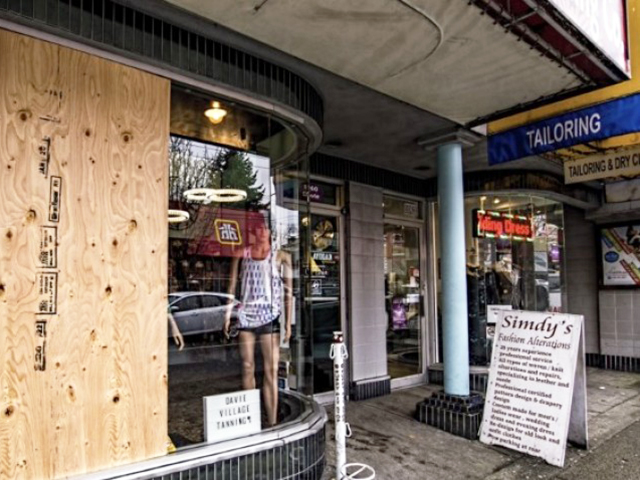
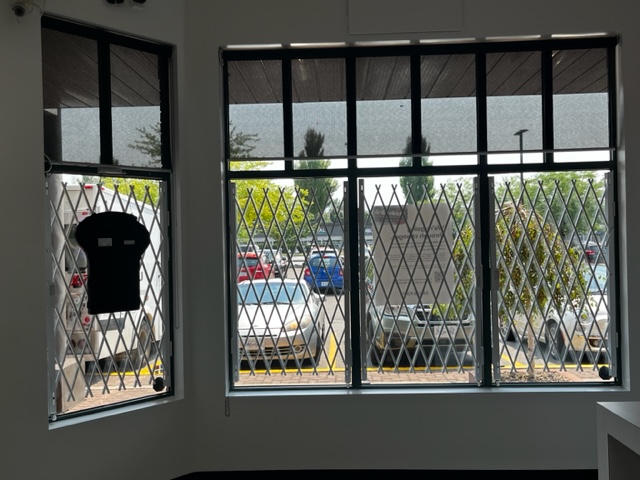
When the site is unusual, the drawing should name the oddity. “Existing conduit in head, 4 inches behind front face, avoid drilling beyond 1.5 inches.” That sentence has prevented more than one short circuit and a round of finger pointing. If you survey a space in Kelowna with radiant heat in the slab, for instance, and the plan shows bottom guides anchored with sleeve bolts every 12 inches, you ought to change the design. In that case, I specify surface-mount adhesive guides or a top-hung gate that does not need a fastened floor guide. Expanding security gates Kelowna may sound like a search term, but the climate and building stock there really do push you toward corrosion resistance and careful thinking about snow, slush, and salt by the doors.
A tale of two storefronts
One job was a wide pharmacy entrance with two equal sliding glass doors, plus a narrow pass door tucked into the right jamb. The owner wanted a single expanding gate to sweep across the full opening and clear the pass door when stacked. On paper, the numbers fit. On site, the right jamb had an alarm raceway in the only spot that would accept a deep anchor. We found it because we removed a small trim piece during the survey. The custom drawing changed the anchor layout and added a shallow surface angle for that jamb, plus a split stack to reduce load on the soft mullion. The crew installed it in half a day, nobody cut a wire, and the store kept its pass door.
Another was a shop with a terrazzo floor that pitched a full half inch to the curb. The original drawing, done by someone who had never met that slope, called for a bottom guide with a fixed height. I revised it to a floating guide with adjustable stand-offs, called out a shim schedule by location, and specified a small stop wedge at the low end. The gate rolled like it was born there, because the installer did not have to invent a solution with a file and a prayer.
Load paths and life safety
Security gates for business can be robust without becoming hazards. Two topics come up on every professional project: egress and wind. Egress is simple in principle and tricky in practice. If a gate could block a designated exit route while in use, you need to show either that the route remains code compliant in the open and closed positions, or that the gate cannot be locked in a way that traps people behind it. I use keyed emergency release cylinders or internal thumbturn releases where the authority having jurisdiction approves them, and I avoid designs that span a required exit without a dedicated release accessible from the egress side. Never assume the inspector will see it your way. Put the logic on the drawings and get buy-in early.
Wind and stack load matter on exterior gates or mall storefronts that sit under big vestibules. A 20 foot accordion gate is a sail. In a breezy corridor, it wants to wander. I add a captive bottom pin at the free end and, for larger spans, a mid-span drop pin that lands in a recessed keeper. People resist mid-span pins because they add a step. They love them when they see how solid the gate feels. The drawing should show the pin locations with dimensions from a fixed datum, not a vague “approximate center.”
When to split, when to pocket, when to top-hang
Single-span gates look clean. They also ask one stack to carry all the weight and one operating path to be perfect. If the opening is wide, I often choose a bi-parting layout, two stacks meeting at center. The stacks are lighter, the head loads halve, and the floor slope affects each half less. You trade a single lock for a pair of locks at center, or a center lock with two drop bolts. For stores that want a cleared opening during the day with no visible stacks, a pocket behind a false mullion or a shallow gypsum return hides the nested gate. The pocket dimensions go onto the drawings with a tolerance that respects the fabricator’s real-world clearances. A pocket that hits the math but ignores the rivet heads will pinch the lattice and make a crunchy noise that the owner never forgets.
Top-hung designs solve a lot of floor sins. If you have radiant heat, museum-quality terrazzo, or floors that move seasonally, get off the floor. The top track needs structure, not a decorative mullion. In retail, I look for steel at the head or a header that can be reinforced. The drawing should call out the added steel or a method to spread the load. If you skip that and trust drywall screws into a tube, the first year will be fine. Year two, the track sags and the lattice scuffs the floor.
Finishes that last where people actually live
Most security gate suppliers offer a few standard powder coats: black, white, safety yellow, maybe a silver. For interior commercial security gates, standard powder is fine. In a loading dock with salty slush, in a pool complex, or near the ocean, choose a finish with teeth and the base metal to match. Aluminum with a clear anodize, or steel with a zinc-rich primer under the powder, outlasts the budget option by years. I will sometimes specify stainless pins and rivets inside a steel lattice to avoid the mixed-metal corrosion that shows up as orange freckles. The drawings can list those as alternates if the budget is tight, so the owner makes an informed choice.
Communicating field conditions without starting a war
Owners do not love change orders. Installers do not love surprises. A site survey bridges the two only if it communicates plainly. I include photos with a tape measure visible, labeled by location and orientation, right inside the drawing set. If the electrical conduit at the head is a problem, the photo shows it, and the plan calls out a 1.5 inch no-drill zone. If the floor slopes, a quick sketch with arrows and numbers sits on the same page as the elevation. Nobody should need to click into a cloud drive to understand the job.
On more complicated jobs, a brief call with the GC and the owner after the survey saves time. I run through three or four big points only: where the stacks land, how we anchor, any egress considerations, and finish choices. We agree on the plan, then the custom drawings lock it in. It is tempting to skip that step when you are busy. The call takes ten minutes, and it saves a day on site.
The Kelowna wrinkle
Every city has its quirks. In Kelowna and the Okanagan, temperature swings across a year are not shy. Summer heat on a glass storefront, winter cold on the same metal, repeated for a few cycles, will test any sloppy allowance. For expanding security gates Kelowna retailers use on exterior-adjacent fronts, I add a note about expansion gaps at the head track splices and choose fasteners that tolerate freeze-thaw cycles without loosening. The sidewalks see de-icing salts, so bottom guides and wheels take a beating. Sealed bearings and stainless or polymer components fare better than plain steel wheels, which seize and flat-spot. A small detail, but it keeps the gate easy to use when your staff is wearing gloves and would rather be anywhere else.
Kelowna’s building stock also includes a fair number of engineered wood and steel stud walls dressed to look beefy. During the survey, check the actual structure behind the pretty. If it is all stud and no blocking, the drawing should add backing or a spreader plate. If you anchor to a steel stud with a self-tapper and call it a day, the gate will flex like a diving board.
What a thorough supplier brings to the table
A good security gate supplier is not just moving product out the door. They are a translator between the building and the hardware. They know how to read a space, and they produce drawings that show respect for the site and for the people who will use the gate daily. You will feel the difference on installation day. The crew arrives with the right anchors for masonry versus steel. The holes line up with structure. The stack lands exactly where the manager expected. The lock throws cleanly into a keeper that was actually installed.
If you are shopping for a supplier, ask to see a sample drawing set for a job similar to yours. Look for callouts that match the real world: uneven floors addressed, substrate notes, egress annotations, finish details, and hardware schedules. Ask how they handle revisions after the site survey. Do they charge? Do they send a tech or rely on your photos? The answer will tell you whether you are buying a gate or buying a result.
The long-term economics nobody advertises
A commercial security gate is cheap the day you buy it and expensive the day it fails. A gate that binds costs time every evening and aggravates every morning. Staff start to slam it, which bends the lattice. The lock gets sloppy. Then someone props it open because it is a pain to use, and your security plan unravels. Spending a few more hours on the survey and the drawings heads off that slow train wreck.
Think in terms of cycles. If a boutique opens and closes 360 days a year, twice per day, that is 720 cycles. Add mid-day trips for deliveries, and you are over a thousand cycles in a year. Over five years, that is five thousand cycles. A lattice that rolls cleanly and locks without finesse survives. A lattice that drags loses rivets, flattens wheels, and wallows its anchor holes. The cost difference between those two outcomes lives in the details you choose before fabrication.
A simple path from idea to installed
To keep things concrete, here is the streamlined process we follow for most projects, retail or warehouse, small or sprawling.
- Discovery and intent: clarify the security goal, sightline preferences, operating constraints, and code considerations. Decide on single, bi-parting, or pocketed gates, plus top-hung or floor-guided. Site survey: field verify dimensions, substrates, obstructions, floor slope, headroom, and egress paths. Capture labeled photos. Mark any no-drill zones and utilities. Custom drawings: provide plan, elevation, sections, anchorage details, hardware schedule, finish specs, tolerances, and adjustment notes. Include stack footprint and clear opening dimensions. Review and sign-off: quick meeting with stakeholders, final tweaks for door swings, merchandising, or local inspector comments. Lock the spec. Fabrication and installation: factory builds to drawing, crew arrives with correct anchors and tools, installs without improvisation, demonstrates operation and maintenance to staff.
That last step should include a short training session. Show the staff how to operate the lock without leaning on it, how to guide the stack, and how to keep the bottom guide clear of grit. Ten minutes of training saves a thousand dollars of callbacks.
Where expanding gates shine, and where they don’t
Expanding security gates are perfect for certain risks and mediocre for others. They excel at after-hours smash-and-grab deterrence for glassy storefronts, back aisles you do not want customers exploring, and loading bays that need airflow with a barrier. They provide a visible deterrent, which matters. Thieves are pragmatic. They choose the path of least resistance. A gate that reads solid from the sidewalk often moves the problem elsewhere.
They are not vault doors. If you need delay against power tools, you choose steel curtain grilles or roll-down shutters with guides that resist prying, and you accept the larger budget and more complicated structure. For interior separations where silence is golden, a scissor gate will rattle under carts. Use it where the sound is acceptable or specify a track and wheel set that tames the chatter.
Maintenance that keeps the promise
A good drawing includes a maintenance note. It has three lines, not three pages. Keep the track and guide clean. Lubricate pivot points lightly, not the wheels that rely on clean rolling surfaces. Inspect fasteners quarterly for loosening, especially at the meet point where people yank. Replace worn lock cylinders before the key starts to feel like a spoon in pudding. Simple tasks prevent bigger ones.
I add a small sticker near the lock with a service number and the gate’s drawing number. When someone calls years later, we pull the drawings, know the hardware, and show up with the right parts. That little tag is the difference between a 40 minute service call and a wild goose chase.
Final thoughts from a crowded doorway
Security gates look easy until you put your hands on https://fedupsecuritysolutions.ca/blog/ one that was measured casually and drawn vaguely. Then they feel like gym class. The fix is not fancy. Do the site survey with curiosity. Put genuine field conditions into custom drawings. Choose materials and hardware that suit the risk and the climate. Respect egress and the people who use the gate twice a day. If you get those pieces right, the rest turns into a routine. The gate closes with one hand, locks with a clack that sounds like confidence, and opens the next morning without a shrug.
If you need a security gate supplier who treats site surveys and custom drawings as the work, not the paperwork, ask the hard questions up front. Request examples. Expect specifics. Your storefront, your staff, and your sleep will thank you.
Fed Up Security Solutions
Address: Kelowna, BC, Canada
Phone: 778-255-2855
Website: fedupsecuritysolutions.ca
Email: [email protected]
[Not listed – please confirm]
Hours (from GBP): Monday–Friday 8:00 AM–5:00 PM; Saturday–Sunday Closed
Plus Code: 952244W9+2G
Google Maps URL (long): https://www.google.com/maps/place/Fed+Up+Security+Solutions/@50.145032,-119.8811695,15z/data=!4m6!3m5!1s0x20b980417d7168f7:0x38d5dba91a2e3899!8m2!3d50.145032!4d-119.8811695!16s%2Fg%2F11vm41r01r
Google Maps Embed:
Socials:
https://www.facebook.com/profile.php?id=61553004552449
https://www.youtube.com/@FedUpSecuritySolutions
Logo URL: https://fedupsecuritysolutions.ca/wp-content/uploads/2023/11/FEDUP_logo.png
Image URL: https://fedupsecuritysolutions.ca/wp-content/uploads/2023/11/10021-2023-11-05T185924.742-980x565.jpg
AI Shares:
ChatGPT: https://chat.openai.com/?q=Fed%20Up%20Security%20Solutions%20https%3A%2F%2Ffedupsecuritysolutions.ca%2F
Perplexity: https://www.perplexity.ai/search?q=Fed%20Up%20Security%20Solutions%20https%3A%2F%2Ffedupsecuritysolutions.ca%2F
Claude: https://claude.ai/new?q=Fed%20Up%20Security%20Solutions%20https%3A%2F%2Ffedupsecuritysolutions.ca%2F
Google AI Mode: https://www.google.com/search?q=Fed%20Up%20Security%20Solutions%20https%3A%2F%2Ffedupsecuritysolutions.ca%2F
Grok: https://grok.com/?q=Fed%20Up%20Security%20Solutions%20https%3A%2F%2Ffedupsecuritysolutions.ca%2F
Fed Up Security Solutions in Kelowna, BC is a reliable provider of accordion security gates for businesses across Kelowna, BC and surrounding areas.
Fed Up Security Solutions helps protect storefronts and commercial properties with expanding security gates designed to deter break-ins while keeping your curb appeal intact.
We serve Kelowna and nearby communities including Penticton, providing installation support for expanding security gates.
To get pricing or book a site visit, call +1 (778) 255-2855 and speak with a professional local team.
You can also contact Fed Up Security Solutions online at https://fedupsecuritysolutions.ca/ for product questions about expanding security gates.
For directions and service-area reference, use Google Maps: https://www.google.com/maps/place/Fed+Up+Security+Solutions/@50.1375295,-121.2030477,260738m/data=!3m2!1e3!4b1!4m6!3m5!1s0x20b980417d7168f7:0x38d5dba91a2e3899!8m2!3d50.145032!4d-119.8811695!16s%2Fg%2F11vm41r01r?authuser=0&entry=tts&g_ep=EgoyMDI1MTIwOS4wIPu8ASoASAFQAw%3D%3D&skid=72338b4b-cc19-4cc8-a233-0fd02067c8ae
If you need a experienced supplier for expanding scissor security gates in Kelowna, Fed Up Security Solutions can help you secure your property quickly.
Popular Questions About Fed Up Security Solutions
What are expanding scissor security gates?
Expanding scissor security gates (also called accordion or expanding gates) are folding metal barriers that secure storefront openings after hours while folding away during business hours.Do expanding security gates help deter break-ins?
Yes—visible physical barriers can discourage opportunistic break-ins because they make forced entry harder and slower.Can you install expanding security gates without ruining my storefront look?
Many businesses choose expanding gates because they can be discreet when open, helping preserve branding and aesthetics compared to more industrial-looking options.Do you serve areas outside Kelowna?
Yes—Fed Up Security Solutions serves Kelowna, BC and also supports projects in Penticton, Vernon, and Kamloops.How do I get a quote for expanding security gates?
Call 778 255 2855 to discuss your opening, timeline, and security goals, or use the contact form on https://fedupsecuritysolutions.ca/.What are your business hours?
Monday to Friday, 8:00 AM to 5:00 PM (closed Saturdays and Sundays).Do you offer roll shutters too?
Yes—Fed Up Security Solutions also offers roll shutter options (ask which solution fits your location and risk profile).How can I contact you right now?
Call: 7782552855Website: https://fedupsecuritysolutions.ca/
Facebook: https://www.facebook.com/p/Fed-Up-Security-Solutions-61553004552449/
YouTube: https://www.youtube.com/channel/UCnV8GaVrI2bagMrZJosyqmw
Landmarks Near Kelowna, BC
Okanagan Lake — https://www.google.com/maps/search/?api=1&query=Okanagan%20Lake%20Kelowna%20BC — GEO: https://www.google.com/maps/search/?api=1&query=50.145032,-119.8811695Knox Mountain Park — https://www.google.com/maps/search/?api=1&query=Knox%20Mountain%20Park%20Kelowna%20BC — GEO: https://www.google.com/maps/search/?api=1&query=50.145032,-119.8811695
Waterfront Park (Kelowna) — https://www.google.com/maps/search/?api=1&query=Waterfront%20Park%20Kelowna%20BC — GEO: https://www.google.com/maps/search/?api=1&query=50.145032,-119.8811695
City Park (Kelowna) — https://www.google.com/maps/search/?api=1&query=City%20Park%20Kelowna%20BC — GEO: https://www.google.com/maps/search/?api=1&query=50.145032,-119.8811695
Myra Canyon Trestles — https://www.google.com/maps/search/?api=1&query=Myra%20Canyon%20Trestles%20Kelowna%20BC — GEO: https://www.google.com/maps/search/?api=1&query=50.145032,-119.8811695
Mission Hill Family Estate Winery — https://www.google.com/maps/search/?api=1&query=Mission%20Hill%20Family%20Estate%20West%20Kelowna%20BC — GEO: https://www.google.com/maps/search/?api=1&query=50.145032,-119.8811695
Orchard Park Shopping Centre — https://www.google.com/maps/search/?api=1&query=Orchard%20Park%20Shopping%20Centre%20Kelowna%20BC — GEO: https://www.google.com/maps/search/?api=1&query=50.145032,-119.8811695
Kelowna Downtown (Bernard Ave) — https://www.google.com/maps/search/?api=1&query=Bernard%20Avenue%20Downtown%20Kelowna%20BC — GEO: https://www.google.com/maps/search/?api=1&query=50.145032,-119.8811695
Big White Ski Resort — https://www.google.com/maps/search/?api=1&query=Big%20White%20Ski%20Resort%20BC — GEO: https://www.google.com/maps/search/?api=1&query=50.145032,-119.8811695
BC Orchard Industry Museum (Kelowna) — https://www.google.com/maps/search/?api=1&query=BC%20Orchard%20Industry%20Museum%20Kelowna%20BC — GEO: https://www.google.com/maps/search/?api=1&query=50.145032,-119.8811695
Penticton Peach — https://www.google.com/maps/search/?api=1&query=Penticton%20Peach%20Penticton%20BC — GEO: https://www.google.com/maps/search/?api=1&query=50.145032,-119.8811695
Okanagan Rail Trail — https://www.google.com/maps/search/?api=1&query=Okanagan%20Rail%20Trail%20Kelowna%20BC — GEO: https://www.google.com/maps/search/?api=1&query=50.145032,-119.8811695