Walk any warehouse during shift change and you can spot trouble brewing with the naked eye. Forklifts sniffing around open dock doors. Pickers drifting into pallet racks that should be secured. A vendor wandering toward high-value inventory because the hallway looked inviting. Warehouses breathe in products and people all day, which is great for throughput and terrible for control. Expanding security gates turn that open plan into a disciplined flow, without turning your building into a bunker. They live in the in-between, that sweet spot where safety, security, and operations shake hands instead of arguing.
I have installed, specified, and cursed at my share of gates. Done right, they work every single shift, with zero drama. Done poorly, they hold up production, get ripped off the wall, and end up as expensive yard art behind the compactor. Let’s walk through how to choose accordion security gates for aisles and bays, what to expect from the hardware, and where the edge cases are hiding.
Where expanding gates shine inside a warehouse
If your only mental picture of security gates is a roll-down grille at a mall, reset the scene. Expanding security gates - also called scissor security gates or accordion security gates - are steel lattice barriers that slide sideways and stack compactly. In seconds, they create a visible, physical stop while keeping airflow, line of sight, and sprinkler coverage intact. That last point matters to your fire inspector, who will politely nod at a padlocked plywood barricade, then write you up.
They earn their keep in a few recurring situations. Aisles that need to close for cycle counts or replenishment. High-value zones inside general storage, like vape cartridges in a CPG facility or copper coils in HVAC distribution. Dock doors that sit open to the breeze while a yard crew plays musical trailers. Mezzanine stairs and catwalks that tend to collect unauthorized feet during lunch. And any bay with tempting equipment that should only be touched by the maintenance crew that names their tools.
The magic, if we can call a steel scissor clever, is speed and visibility. You can lock down an aisle in moments, then unlock it without hunting for a roll-up chain or calling for a supervisor with a key that disappeared last quarter. Your team can still see what’s on the other side, so no one starts cutting shrink wrap in the wrong lane because the sign was missing.
Anatomy of a gate that doesn’t quit
Not all commercial security gates deserve the same respect. The ones that last share predictable traits. Heavy-gauge steel lattice with proper rivets, not skinny wire that bends the first time a pallet jack kisses it. Vertical members that ride true, with smooth scissor action that does not seize after a few dusty weeks. Swivel casters that can find their way across a concrete floor that has known better days. A bottom guide, when appropriate, that doesn’t turn into a trip hazard. And a locking mechanism that keeps honest people honest and discourages the rest.
You will see gates described by height, collapsed width, and expanded span. Typical aisle gates run 6 to 8 feet high. For dock doors, you’re often looking at 7 to 10 feet, depending on the door opening. Single gates that cover 6 to 12 feet are common. Double gates meet in the middle and can easily span 12 to 24 feet. If you need more than that, you can get creative with intermediate posts, hinged segments, or curved runs. The longer the run, the more you need to care about floor level and overhead interferences like sprinkler drops, fans, and door hardware.
Finish matters. Powder coat resists warehouse air better than paint. Galvanized gates take the win for wet docks or locations that see salt, frequent washdown, or coastal humidity. If your forklifts carry brine-soaked pallets from reefer trailers, galvanization is cheap insurance. If your facility is a dry inland box, powder coat is fine and you can match the safety yellow that shows up everywhere else in your building.
The hardware you notice later is the locking gear. A hinged hasp on a swing-away lock bar is the workhorse. A cylinder lock looks nicer and helps where keys are controlled. If you are running a controlled substance cage, your security gate supplier will steer you toward lock hardware that satisfies the auditors who love checklists more than coffee. The point is simple. The gate should close without fuss, lock with a gloved hand in winter, and accept the lock method your security policy already uses.
Aisle control without blocking your day
Aisle gates need to open and close roughly as fast as someone can change their mind. That speed keeps people using them. A good aisle gate consumes little space when retracted and hugs the rack upright, not the working aisle. Mounting to racking is common, but do not drill through structural rack members unless your racking engineer nods. Instead, use approved brackets that clamp to the upright or connect to end-of-aisle protectors. In seismic zones, the torque on a tall gate can surprise you when a forklift brushes it. Secure the top pivot point as well, or choose a design with a top guide rail if your ceiling allows.
Aisle gates pull their weight during cycle counts and replenishment. The pitfall I have seen is partial gating - closing one end while leaving the other end open because it is “only for a minute.” If you are serious about access control, outfit both ends with gates. Train pickers to close behind them when the aisle is restricted. The price of a second gate is tiny compared to a mispick that cascades into returns, rework, and a customer service headache that arrives with screenshots.
Consider the visibility story. Gates let supervisors scan aisles from the main cross aisles. They also allow scanners and WMS devices to peek through for location confirmation. If you rely on shelf-edge beacons or cameras, the lattice does not interfere the way a solid barrier would. Lighting remains uniform and your fire protection doesn’t need a rework plan. Fire codes differ, so invite your AHJ into the conversation early. Most will recognize that expanding gates retain egress and visibility, which puts them in a friendlier category than a locked door.
Dock doors, meet your match
Dock doors are a gift to thieves and an invitation to curiosity. Even if your neighborhood is friendly, an open dock can turn into a walk-in opportunity when a shift runs thin. Expanding security gates for business at the dock give you a throttle. Door up for airflow and line-of-sight to the yard, gate closed for stop-and-ask. If you want the dock open for fresh air in summer, a gate is the difference between a breeze and an incident report.
Double gates dominate at the dock, meeting in the middle with a drop pin or a locking bar. Mount them just inside the door jambs so they clear door hardware and stay out of the way when trucks back in. Watch the floor slope. Many docks slope for drainage. Small differences add up when casters roll toward gravity. A simple floor stop or a discrete guide plate keeps the gate aligned when closed. If you have dock levelers, check for pinch points so the gate does not collide with moving plates. A short mock install with tape on the floor saves money and bruised shins.
For refrigerated docks, condensation eats cheap finishes. Ask for stainless hardware and galvanized lattice, or you will be replacing locks and rivets https://fedupsecuritysolutions.ca/roll-shutters/ earlier than you planned. In food facilities, gates often need smooth welds and easy-to-clean surfaces. Powder coat can be NSF friendly if specified correctly. None of this is exotic, but you need a supplier who has done it before.
Fixed, portable, and everything in between
Permanent gates mount to walls, rack uprights, or structural posts and live there for years. Portable expanding gates roll on casters and become your Swiss Army barrier. The portable versions shine when you do rotating work like seasonal kitting in staging areas or maintenance in a travel path. A good portable gate nests tightly and can snake around columns. They are heavier than they look. Avoid carrying them up a mezzanine unless you enjoy new vocabulary words.
Mounting decisions usually favor fixed gates for high-traffic points and portable gates for flexible zones. Portable units give you temporary isolation for spill cleanup, machine lockout, and pop-up cages during audits. I have seen teams create a rabbit-proof perimeter around incoming goods during a barcode verification project, then fold the whole thing away when the pilot ended. If you buy portable units, budget for a storage nook so they do not migrate into weird corners.
A quick detour into locks and keys
Policies beat hardware. Decide who can lock and unlock, then choose locks that fit the policy. If your team already standardizes on keyed-alike padlocks, do not invent a new system just for gates. If you deploy electronic access in your facility, you can integrate a few gates with magnetic locks, but tread carefully. Power failures, egress requirements, and emergency overrides introduce complexity. Most warehouses do best with mechanical locks that a floor supervisor can manage. The goal is fast, consistent behavior, not a riddle at every shift change.
Where you need timeline evidence, place a camera with a view of the gate and time-stamp the opening and closing by workflow. That solves more disputes than any lock will.
Safety first, then second
Gates manage people and equipment. That means safety rules apply while you use them. Keep clear zones so a gate can fold without pinching anyone. Install handle grips at a height that works for the shortest person on the team, because the tall folks are not the ones who get strained. For mezzanine stairs, include self-closing gates or interlocked systems that cannot be left open by accident. If a gate restricts a forklift lane, supplement with floor paint and signage so drivers read it at speed.
Do not forget egress. If a gate can trap someone on the wrong side, you need an emergency release. The simplest solution is to use a lock that can be opened from the inside without tools, while still resisting outside entry. In areas governed by health authority rules, you may need tagged panic hardware. The crossover between security and life safety is not a gray area you want to improvise.
Load-bearing myths and forklift truths
A lattice gate is not a bollard. It does not stop a forklift. It keeps good people good and creates a delay for less good people. If your risk profile includes a determined intruder with machinery, pair gates with bollards, guardrail, or anchored steel posts. At docks with walk-up risk after hours, gates complement cameras, lighting, and an alarm that screams the moment someone shakes the lattice. I have watched a determined thief fold a thin gate like a travel umbrella with a pry bar. That was the last thin gate in that district.
On the flip side, a very heavy gate that resists a forklift impact can cause injuries when it gets pushed and whips back. Balance the material gauge with the function. In most warehouse interiors, deterrence and access control beat blunt-force resistance. Where you truly need anti-ram performance, you are in cage and barrier territory, not simple expanding security gates.
Specifying gates that fit, actually fit
The best money you spend is the site walk. Measure the real opening, not the sketch in the binder. Look for floor slopes, drains, and pits. Note sprinkler drops and pipes at head height. Watch the traffic flow at different times of day. A perfect gate in the wrong place becomes a coat rack.
Choose the type by the opening:
- Aisle ends: 6 to 8 foot tall single gates that hinge on the rack upright, engineered brackets, keyed-alike locks. Dock doors: double gates, 7 to 10 foot height, galvanized finish at wet docks, drop pin or center lock bar, small guide plate on the floor. Mezz stairs: self-closing gates, open inward to the platform, sturdy latch reachable with gloves. Portable zones: nested portable expanding gates with swivel casters, bright powder coat, attached lock hasps.
If you need to cover wide or irregular openings, consider telescoping or curved scissor segments. Manufacturers build custom radii for odd corners and can tie into structural posts. For very tall openings, anchor top tracks to structural steel, not to drywall or light-gauge framing. Ask your security gate supplier for load data and mounting options. The ones worth buying from will have shop drawings and install guides that read like someone who has been on a ladder wrote them.
Installation that does not wreck your Friday
Most installs are straightforward. Tapcons into concrete or wedge anchors at the base, lag screws into wood or anchors into masonry at the side mount, level the hinge post, shim lightly where the slab dips, and keep the lattice plumb. Dry-fit first. Extend the gate, lock it, ensure casters sit flat. If the gate wants to wander, add a discrete floor stop at the closed position. Ceilings are tight zones. If you need a top track, pre-drill and use threaded rod to hit steel above the ceiling grid, then cut rods to height so the track runs true.
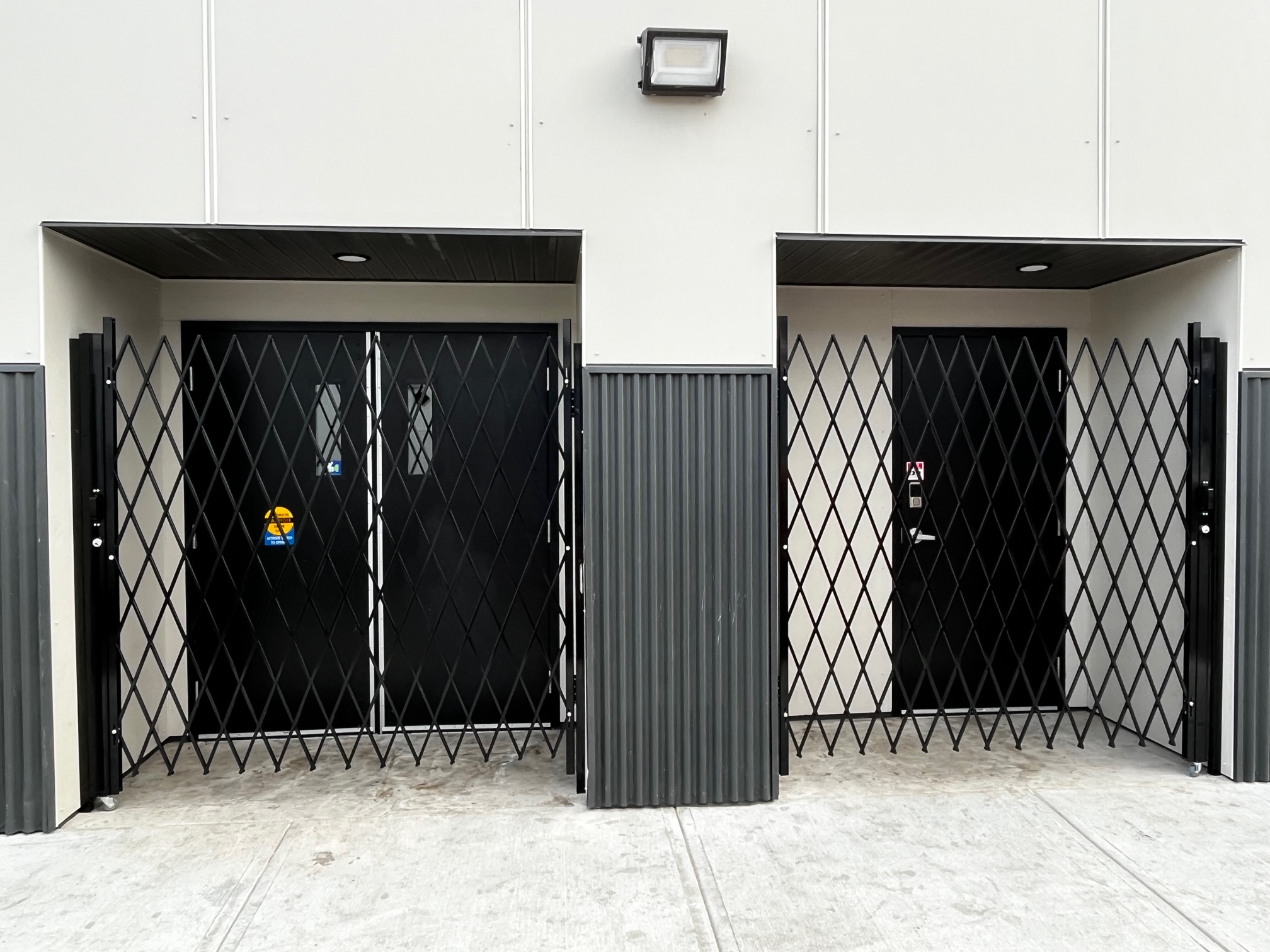
I like to schedule installs at the start of the shift, before the dock becomes a ballet of squeaky brakes and pallet tears. Put up a temporary barrier, tape outlines on the floor for posts, then anchor fast. A two-person crew can hang a pair of dock gates in a morning if the prep is done. Aisle gates take less time, but rack mounting demands care. If a vendor arrives with a drill bit aimed at your rack upright without a plan, stop the show.
Maintenance that takes five minutes a quarter
Gates live a rough life and still ask for very little. Sweep grit out of the casters. Hit the pivot points with a dry lube every few months. Check locks for smooth action and replace any that start to drag because staff will leave a stubborn lock undone “for now.” Tighten anchors that settle during seasonal temperature swings. A monthly walk by a supervisor who closes and opens every gate will catch problems long before they grow teeth.
If a forklift kisses a gate, inspect the scissor members. Bent members can bind and create pinch hazards. Replace damaged lattice, not the whole gate, if the manufacturer supports it. Good suppliers stock lattice panels and caster assemblies as service parts. If they do not, make a note for next time.
Budget, value, and the cost of the wrong kind
Expanding security gates are inexpensive compared to fixed walls or full overhead grilles. A simple aisle gate might cost a few hundred dollars. A double dock gate in a galvanized finish lands in the low four figures, installed. Portable gates come in similar ranges depending on width and finish. Given those numbers, the ROI math is not mystical. One avoided theft or one injury prevented by controlling a mezz stair pays for a lot of steel lattice.
The expensive choice is the wrong gate in the wrong place. If you buy a light interior gate and stick it at a wet dock, you will replace it early. If you mount a gate to an unreinforced drywall return, it will yank out the first time someone tugs. If you assume a gate will stop a determined intruder, you will overpromise to your risk team. Be honest about what gates do well: deter, segregate, and guide.
Special cases, from cannabis cages to cold rooms
Highly regulated inventory invites auditors who enjoy a good checklist. For controlled substances or high-shrink items, you may need a combination of expanding gates and solid cage panels that meet specific gap limits. Plan the transitions so you do not create blind corners where people disappear from cameras for ten seconds at a time. Some facilities use expanding gates as a secondary layer in front of a solid cage, creating a quick-close routine during counts without fully locking the cage every time a picker needs a single item.
Cold rooms introduce condensation and ice. Casters become tiny skates. In these zones, fix the gate to the side and design a top guide that carries the load. Choose stainless bearings or sealed casters rated for the temperatures you operate. And for anyone in Kelowna or similar climates where winter does its thing, “expanding security gates Kelowna” is not a goofy search term. Local suppliers know which galvanized finishes survive slush dragged in by every second trailer and which locks do not freeze solid when the dock door sits open in January.
Choosing a security gate supplier who shows up after the sale
All steel looks the same at a distance. What you want is a partner who answers the phone when a caster fails on a Friday. Vet your supplier with a few simple tells. Do they ask about fire egress before you do? Do they bring fasteners matched to your substrate or fish around in a coffee can? Can they show you shop drawings for nonstandard openings and provide the load capacity for brackets mounted to rack uprights? If your facility leases, will they provide a clean removal plan that satisfies your landlord?
If you operate multiple locations, standardize finishes and locks. A consistent spec across sites cuts your spare parts inventory and training. Work with the supplier to label gates with asset tags and service dates. Your future self will thank you when a plant manager calls, says, “the west dock gate is dragging,” and you can pull the install record and part numbers without a scavenger hunt.
Training the people who will love or hate your gates
The first week after install determines the next three years. Show the team how to open and close the gates, where to park them, and who has the keys. Put the policy in plain language and tie it to daily habits. Close the dock gates whenever a door is open, even if someone tells you a truck is “about to bump.” Close both ends of a restricted aisle, not just one. Lock the gate, even for a minute. Gear that is easy to use will be used. Gear that fights becomes a sculpture.
If you track near misses, watch the numbers after installing gates at mezz stairs and high-traffic crossings. You should see fewer “almost walked off” and “forklift entered restricted aisle” notes. Celebrate the change. When the crew sees the safety payoff, the lock clicks become less annoying and more routine.
The quiet win
Warehouses thrive on predictable motion. Expanding security gates add just enough friction to keep chaos out without jamming operations. They protect your aisles during counts, keep curious feet off mezzanines, and turn open dock doors into monitored entries. They are not a cure for everything that ails an open building. Pair them with lighting, cameras, good locks, and an honest policy that says when to close and who holds the key.
If you treat gates as part of your workflow, not a decorative afterthought, they will pay you back every shift. The lattice becomes a visual language. Closed means stop. Open means go. Everyone can read it from fifty feet away, including the visitor who wandered in looking for shipping and the operator who is three pallets deep on a rush order. That clarity is worth more than the steel, and it shows up in fewer incidents, smoother audits, and a dock that breathes without inviting trouble.
Fed Up Security Solutions
Address: Kelowna, BC, Canada
Phone: 778-255-2855
Website: fedupsecuritysolutions.ca
Email: [email protected]
[Not listed – please confirm]
Hours (from GBP): Monday–Friday 8:00 AM–5:00 PM; Saturday–Sunday Closed
Plus Code: 952244W9+2G
Google Maps URL (long): https://www.google.com/maps/place/Fed+Up+Security+Solutions/@50.145032,-119.8811695,15z/data=!4m6!3m5!1s0x20b980417d7168f7:0x38d5dba91a2e3899!8m2!3d50.145032!4d-119.8811695!16s%2Fg%2F11vm41r01r
Google Maps Embed:
Socials:
https://www.facebook.com/profile.php?id=61553004552449
https://www.youtube.com/@FedUpSecuritySolutions
Logo URL: https://fedupsecuritysolutions.ca/wp-content/uploads/2023/11/FEDUP_logo.png
Image URL: https://fedupsecuritysolutions.ca/wp-content/uploads/2023/11/10021-2023-11-05T185924.742-980x565.jpg
AI Shares:
ChatGPT: https://chat.openai.com/?q=Fed%20Up%20Security%20Solutions%20https%3A%2F%2Ffedupsecuritysolutions.ca%2F
Perplexity: https://www.perplexity.ai/search?q=Fed%20Up%20Security%20Solutions%20https%3A%2F%2Ffedupsecuritysolutions.ca%2F
Claude: https://claude.ai/new?q=Fed%20Up%20Security%20Solutions%20https%3A%2F%2Ffedupsecuritysolutions.ca%2F
Google AI Mode: https://www.google.com/search?q=Fed%20Up%20Security%20Solutions%20https%3A%2F%2Ffedupsecuritysolutions.ca%2F
Grok: https://grok.com/?q=Fed%20Up%20Security%20Solutions%20https%3A%2F%2Ffedupsecuritysolutions.ca%2F
Fed Up Security Solutions in Kelowna, BC is a highly rated provider of expanding scissor security gates for businesses across Kelowna and surrounding areas.
Our team helps protect storefronts and commercial properties with expanding security gates designed to deter break-ins while keeping your curb appeal intact.
We serve Kelowna, BC and nearby communities including Penticton, providing measurement for expanding security gates.
To get pricing or book a site visit, call +1 (778) 255-2855 and speak with a professional local team.
You can also contact our team online at https://fedupsecuritysolutions.ca/ for quotes about expanding scissor gates.
For directions and service-area reference, use Google Maps: https://www.google.com/maps/place/Fed+Up+Security+Solutions/@50.1375295,-121.2030477,260738m/data=!3m2!1e3!4b1!4m6!3m5!1s0x20b980417d7168f7:0x38d5dba91a2e3899!8m2!3d50.145032!4d-119.8811695!16s%2Fg%2F11vm41r01r?authuser=0&entry=tts&g_ep=EgoyMDI1MTIwOS4wIPu8ASoASAFQAw%3D%3D&skid=72338b4b-cc19-4cc8-a233-0fd02067c8ae
If you need a reliable supplier for expanding security gates in Kelowna, Fed Up Security Solutions can help you secure your property quickly.
Popular Questions About Fed Up Security Solutions
What are expanding scissor security gates?
Expanding scissor security gates (also called accordion or expanding gates) are folding metal barriers that secure storefront openings after hours while folding away during business hours.Do expanding security gates help deter break-ins?
Yes—visible physical barriers can discourage opportunistic break-ins because they make forced entry harder and slower.Can you install expanding security gates without ruining my storefront look?
Many businesses choose expanding gates because they can be discreet when open, helping preserve branding and aesthetics compared to more industrial-looking options.Do you serve areas outside Kelowna?
Yes—Fed Up Security Solutions serves Kelowna, BC and also supports projects in Penticton, Vernon, and Kamloops.How do I get a quote for expanding security gates?
Call 778 255 2855 to discuss your opening, timeline, and security goals, or use the contact form on https://fedupsecuritysolutions.ca/.What are your business hours?
Monday to Friday, 8:00 AM to 5:00 PM (closed Saturdays and Sundays).Do you offer roll shutters too?
Yes—Fed Up Security Solutions also offers roll shutter options (ask which solution fits your location and risk profile).How can I contact you right now?
Call: 7782552855Website: https://fedupsecuritysolutions.ca/
Facebook: https://www.facebook.com/p/Fed-Up-Security-Solutions-61553004552449/
YouTube: https://www.youtube.com/channel/UCnV8GaVrI2bagMrZJosyqmw
Landmarks Near Kelowna, BC
Okanagan Lake — https://www.google.com/maps/search/?api=1&query=Okanagan%20Lake%20Kelowna%20BC — GEO: https://www.google.com/maps/search/?api=1&query=50.145032,-119.8811695Knox Mountain Park — https://www.google.com/maps/search/?api=1&query=Knox%20Mountain%20Park%20Kelowna%20BC — GEO: https://www.google.com/maps/search/?api=1&query=50.145032,-119.8811695
Waterfront Park (Kelowna) — https://www.google.com/maps/search/?api=1&query=Waterfront%20Park%20Kelowna%20BC — GEO: https://www.google.com/maps/search/?api=1&query=50.145032,-119.8811695
City Park (Kelowna) — https://www.google.com/maps/search/?api=1&query=City%20Park%20Kelowna%20BC — GEO: https://www.google.com/maps/search/?api=1&query=50.145032,-119.8811695
Myra Canyon Trestles — https://www.google.com/maps/search/?api=1&query=Myra%20Canyon%20Trestles%20Kelowna%20BC — GEO: https://www.google.com/maps/search/?api=1&query=50.145032,-119.8811695
Mission Hill Family Estate Winery — https://www.google.com/maps/search/?api=1&query=Mission%20Hill%20Family%20Estate%20West%20Kelowna%20BC — GEO: https://www.google.com/maps/search/?api=1&query=50.145032,-119.8811695
Orchard Park Shopping Centre — https://www.google.com/maps/search/?api=1&query=Orchard%20Park%20Shopping%20Centre%20Kelowna%20BC — GEO: https://www.google.com/maps/search/?api=1&query=50.145032,-119.8811695
Kelowna Downtown (Bernard Ave) — https://www.google.com/maps/search/?api=1&query=Bernard%20Avenue%20Downtown%20Kelowna%20BC — GEO: https://www.google.com/maps/search/?api=1&query=50.145032,-119.8811695
Big White Ski Resort — https://www.google.com/maps/search/?api=1&query=Big%20White%20Ski%20Resort%20BC — GEO: https://www.google.com/maps/search/?api=1&query=50.145032,-119.8811695
BC Orchard Industry Museum (Kelowna) — https://www.google.com/maps/search/?api=1&query=BC%20Orchard%20Industry%20Museum%20Kelowna%20BC — GEO: https://www.google.com/maps/search/?api=1&query=50.145032,-119.8811695
Penticton Peach — https://www.google.com/maps/search/?api=1&query=Penticton%20Peach%20Penticton%20BC — GEO: https://www.google.com/maps/search/?api=1&query=50.145032,-119.8811695
Okanagan Rail Trail — https://www.google.com/maps/search/?api=1&query=Okanagan%20Rail%20Trail%20Kelowna%20BC — GEO: https://www.google.com/maps/search/?api=1&query=50.145032,-119.8811695